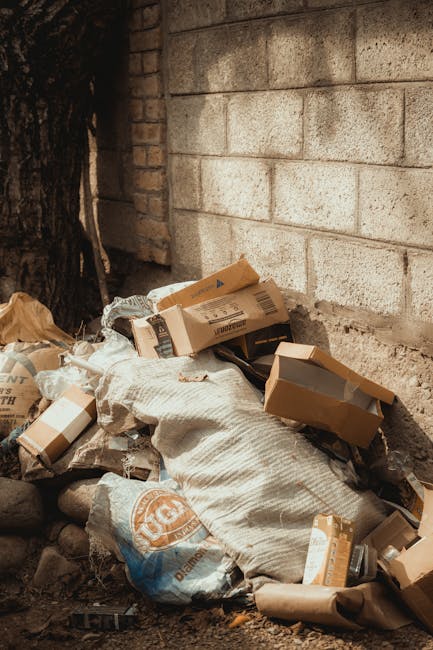
Avoid hidden fees in Hanwell rubbish removal quotes: a practical guide to paying the price you were actually quoted
If you have ever compared rubbish removal prices and then felt a bit wary at the final bill, you are not alone. Hidden extras can creep into a quote through access charges, labour assumptions, unusual waste, or simple vague wording. The good news is that Avoid hidden fees in Hanwell rubbish removal quotes is not about memorising industry jargon. It is about asking the right questions, checking the right details, and spotting the small print before anyone turns up with a van.
This guide breaks down how rubbish removal quotes usually work in Hanwell, what can push the price up, and how to compare providers without getting caught out. It also includes a checklist, a comparison table, and a few common-sense tips that save time and stress. Let's face it, nobody wants a tidy-up job to end with a surprise invoice.
Why Avoid hidden fees in Hanwell rubbish removal quotes Matters
Rubbish removal is one of those services where the headline price can look straightforward, but the final cost depends on what is actually being collected, how easy it is to remove, and whether the waste needs special handling. If a quote is too vague, you may end up paying more than expected for items that were never properly discussed in the first place.
In Hanwell, where homes, flats, shared entrances, and small business premises can all have different access conditions, clarity matters even more. A quote that works for a driveway collection may not work for a basement flat with a tight stairwell and no parking nearby. That is not a trick, just reality. But you need that reality stated clearly before you agree to anything.
Hidden fees usually matter because they affect three things:
- Your budget - especially if you are clearing a whole property or planning several collections.
- Your timing - extra charges can slow down decision-making while you argue over the bill.
- Your trust - once a quote feels slippery, the whole service becomes harder to rely on.
A transparent quote should make it easy to understand what is included, what is excluded, and what circumstances could change the price. If that information is missing, the quote is not really a quote. It is a guess with a number on it.
For people comparing services such as waste removal, house clearance, or flat clearance, that clarity can save a lot of back-and-forth later on.
How Avoid hidden fees in Hanwell rubbish removal quotes Works
The simplest way to think about a rubbish removal quote is this: the company estimates the work based on volume, weight, type of waste, access, and labour. Some providers charge by load size, some by item type, and some by a combination of factors. The exact model varies, but the quote should still be understandable.
A proper quote usually starts with a description of the waste. That might include furniture, general household rubbish, garden waste, builders' debris, or specialist items such as appliances. The clearer your description, the closer the quote should be to the final price. If you say "a few bits and pieces" when there is actually a broken wardrobe, a mattress, and a fridge, you are inviting trouble. Honest trouble, perhaps, but trouble all the same.
What hidden fees often come down to is the mismatch between what was described and what is actually collected. Common examples include:
- extra charges for heavier waste than expected
- additional labour for stairs, long carries, or no parking nearby
- fees for items needing specialist disposal
- surcharges for urgent bookings or out-of-hours visits
- disposal fees added after the site visit rather than included upfront
Some companies will give a rough estimate first and then confirm the final price after seeing the waste in person or reviewing photos. That can be fine, provided the pricing method is clear. The issue is not that a quote changes; the issue is when it changes without warning.
If you are clearing a property and want to understand what to expect before booking, it can help to review related service pages like home clearance, garage clearance, or loft clearance so you know how different waste types may be handled.
Key Benefits and Practical Advantages
The main benefit of learning how to spot hidden charges is obvious: you keep control of the total cost. But there are a few other advantages that people sometimes miss.
- Cleaner comparisons - you can compare providers on a like-for-like basis instead of comparing a vague low quote against a more honest one.
- Less stress on collection day - nobody likes haggling while the clock is ticking and the van is already outside.
- Fewer delays - clear quotes reduce the chance of collections being paused while details get clarified.
- Better decision-making - when you know what is included, you can choose a service based on value, not just price.
There is also a practical benefit for larger clearances. If you are emptying a flat after a move, renovating a kitchen, or clearing old office stock, even a modest hidden fee can distort the whole budget. A few extra pounds here and there adds up faster than people expect. That's the annoying bit, really.
Expert summary: the cheapest rubbish removal quote is not always the best value. The best quote is the one that names what is included, flags what might change, and matches the actual job on the day.
For people with mixed waste streams, it can also help to compare specialist services such as furniture disposal, mattress and sofa disposal, or fridge and appliance removal if those items make up a large part of the load.
Who This Is For and When It Makes Sense
This advice is useful for almost anyone booking rubbish removal in Hanwell, but some people will feel the benefit more than others.
- Homeowners doing a one-off declutter, renovation, or spring clean.
- Tenants and landlords dealing with leftover items after a move-out.
- Flat owners who need a service that accounts for access, lifts, and stairwells.
- Tradespeople looking for builders' waste clearance after a job.
- Local businesses clearing office furniture, archive material, or unwanted stock.
It also makes sense if you are comparing rubbish removal against a skip. Some jobs are better suited to a van and labour service, especially where space is limited or waste has to be removed from inside the property. Other jobs may be easier to price if you already know the waste volume and can read the rules carefully. If you are unsure, the page on what can go in a skip can help you think through the kind of material you need to move.
Truth be told, the people most likely to get caught by hidden fees are the ones in a hurry. Same-day clearout, end-of-tenancy deadline, renovation dust everywhere, boxes in the hallway. You know the scene. When time is tight, it is easy to accept the first quote that sounds reasonable. That is exactly when a careful check matters most.
Step-by-Step Guidance
If you want to avoid hidden charges, work through the quote in a structured way. The process does not need to be complicated.
- List the waste clearly. Write down the item types, rough quantity, and whether anything is bulky, heavy, fragile, or awkward.
- Explain access conditions. Mention stairs, narrow hallways, parking limits, lift access, or whether the team will need to carry items a long distance.
- Ask how the price is calculated. Is it by volume, weight, item, labour time, or a combination? There should be no mystery here.
- Check what is included. Labour, loading, transport, disposal, and any recycling or sorting should ideally be clear from the start.
- Ask about likely extras. Special waste, extra labour, waiting time, or difficult access should be named before you book.
- Request a written quote. Email or message confirmation is useful because it gives you a record of what was agreed.
- Compare more than one provider. Two quotes that look different may actually be based on very different assumptions.
- Read the terms properly. Not the fun part, admittedly, but it is where fee triggers often hide.
A small but useful habit: send photos. Good, clear photos can reduce ambiguity a lot. Try to include the whole pile, not just the front row. If there is a fridge tucked behind the sofa, show that too. A few extra seconds with your phone can prevent a few extra pounds later.
If your clearance includes specific item types, it may also be worth reading about furniture clearance, builders' waste clearance, or garden clearance so you can describe the job in more useful terms.
Expert Tips for Better Results
A few experienced habits can make quote checking much easier. Nothing fancy, just the sort of practical details that reduce friction.
- Use precise item names. "Wardrobe, sofa, two broken desks, one freezer" is much better than "bits of rubbish".
- Ask whether the quote is fixed or estimated. Those two things are not the same, and they should not be treated as if they are.
- Check for minimum charges. A small job may still have a base fee, which is normal, but it should be stated clearly.
- Confirm how access affects price. Ground-floor loading is one thing; carrying heavy items down several floors is another.
- Be careful with specialist items. Appliances, hazardous waste, or contaminated materials may need separate handling.
- Keep all quote messages together. If there is a dispute later, you will be glad you did.
One of the most useful things you can do is ask, "What would change this price?" That single question reveals a lot. If the answer is vague, you should treat the quote cautiously. If the answer is specific and sensible, you are in a much better place.
A slightly nerdy but useful detail: ask whether disposal and recycling are included in the quoted price or only labour and transport. Some businesses separate these internally, which is fine, but the customer should still know the total.
Common Mistakes to Avoid
The biggest mistakes tend to be simple ones, which is why they catch people off guard.
- Accepting a quote without describing the waste properly. Missing one bulky item can shift the price more than you expect.
- Ignoring access details. A van can park nearby in theory, but not always on a busy street or near flats.
- Assuming all waste is treated the same. It is not. Different item types can require different handling.
- Not asking about stairs, waiting time, or parking issues. These are common fee triggers.
- Choosing the cheapest quote on price alone. That usually feels smart for about five minutes.
- Failing to read terms and conditions. Tedious, yes. Still worth it.
There is also a smaller mistake people make: not checking payment methods and when payment is due. If a company expects payment in advance, on completion, or by card only, that should be made clear. You can review payment and security information to understand how a provider handles this side of the job.
And one more thing. If the quote includes words like "from" or "starting at" but no clear explanation of what moves the price up, that is a yellow flag. Not always a problem, but worth a second look.
Tools, Resources and Recommendations
You do not need a fancy spreadsheet to keep control of a rubbish removal quote, although if that is your thing, fair play. A few basic tools are enough.
- Phone photos - take wide shots of the whole load and a closer shot of awkward items.
- Simple item list - note the quantity and type of waste before you ask for prices.
- Message history - keep quote details in email or text rather than relying on memory.
- Property access notes - parking restrictions, entry codes, lift access, and stair counts can all matter.
On the website, the most useful support pages for quote checking are usually pricing and quotes, recycling and sustainability, and the relevant service page for the type of rubbish you are clearing.
For example, a small office clean-out may be better aligned with office clearance, while a household downsizing job may suit house clearance. Matching the service to the job usually produces a more accurate quote. Simple, but effective.
Law, Compliance, Standards, or Best Practice
For rubbish removal, the legal and compliance side is mostly about responsible waste handling, honest pricing, and using a provider that operates safely and properly. You do not need to be an expert in waste law to protect yourself, but you should expect a few basics.
Best practice in the UK generally means the provider should be clear about how waste is collected, transported, and managed, especially where items need special treatment. If hazardous items are involved, that deserves extra care and a more specific conversation. A quote that skips over those details is not doing its job.
From a customer point of view, good practice looks like this:
- prices are explained in plain English
- special items are identified before collection
- the company is upfront about any exclusions or extra charges
- payment terms are clear before the job begins
- safety and access are considered honestly
If you need higher assurance on how a provider works, pages such as insurance and safety, health and safety policy, and hazardous waste disposal can help you understand the standards behind the service.
One useful rule of thumb: if a quote makes it hard for you to understand what you are paying for, it is probably not detailed enough. That is a matter of good business practice, not just customer preference.
Options, Methods, or Comparison Table
Different collection methods work better for different situations. Here is a simple comparison that may help you decide.
| Option | Best for | Price clarity | Hidden fee risk | Notes |
|---|---|---|---|---|
| Van-based rubbish removal | Mixed household, flat, or bulky item clearances | Usually good if access and load are described properly | Medium if labour and access are not discussed | Often convenient for quick, full-service collection |
| Skip hire | Longer projects with predictable waste volumes | Good if permit and fill rules are clear | Medium if permit, size, or prohibited items are overlooked | Best when waste will be added over time |
| Specialist item clearance | Fridges, appliances, mattresses, sofas, or similar items | Can be very clear if item type is specified | Low to medium depending on item condition and access | Useful for awkward or regulated items |
| Business clearance service | Offices, stock rooms, retail spaces, archives | Strong when inventory is listed up front | Medium if volume, data security, or timing is unclear | Best for scheduled, structured removals |
If you are balancing domestic and commercial needs, pages such as business waste removal and office clearance are useful reference points for what the service is designed to handle.
Case Study or Real-World Example
Picture a typical Hanwell flat clearance on a weekday morning. The resident wants a quick quote for a sofa, a broken chest of drawers, a mattress, and a few bags of mixed household waste. The flat is on the third floor, there is no lift, and parking is awkward because half the street is already occupied. Nothing unusual, but those details matter.
If the customer says only "a bit of rubbish," the quote might seem low at first and then rise when the team sees the staircase, the bulky sofa, and the lack of parking. On the other hand, if the customer sends a few photos, mentions the stairs, and names the heavier items, the quote is more likely to be accurate from the start. That is the difference between a smooth booking and a slightly tense conversation on the pavement.
In a similar kind of job, the most predictable quote often comes from being overly specific, almost boringly specific. Item count, access, floor level, and whether anything needs disassembly. Not glamorous, but it works.
For a situation like this, a service page such as mattress and sofa disposal or furniture clearance may be a better fit than a generic rubbish removal request, simply because the job is easier to define.
Practical Checklist
Use this checklist before you accept any rubbish removal quote in Hanwell.
- Have I listed all items clearly, including bulky or awkward ones?
- Have I mentioned stairs, parking, lifts, and distance from the van to the property?
- Do I know whether the quote is fixed or only estimated?
- Have I asked what is included in the price?
- Have I asked what could trigger extra charges?
- Have I checked whether any items need specialist handling?
- Do I have the quote in writing?
- Have I read the terms and payment information?
- Does the company explain its waste handling and safety approach clearly?
- Does the quote still make sense if I compare it with another provider on the same basis?
Quick takeaway: if you can explain the job back to the provider in one sentence and the price still makes sense, you are probably in good shape.
Get a free quote today and see how much you can save.
Conclusion
Avoiding hidden fees in Hanwell rubbish removal quotes comes down to clear information, careful comparison, and a little healthy scepticism. You do not need to be suspicious of every provider. You just need a quote that tells the full story before anyone lifts a single item.
When you describe the waste properly, mention access issues, ask what is included, and keep the quote in writing, you remove most of the room for nasty surprises. That leaves you with something much better than a cheap headline price: a service you can actually trust.
And honestly, that peace of mind is worth a lot when the hallway is full and you just want the job done properly.
Frequently Asked Questions
What are hidden fees in rubbish removal quotes?
Hidden fees are extra charges that were not clearly explained when the quote was given. They often relate to labour, access, waste type, special items, or disposal conditions.
How can I tell if a Hanwell rubbish removal quote is genuine?
A genuine quote should explain what is included, what could change the price, and whether the figure is fixed or estimated. If it feels vague, ask for clarification before booking.
Why do rubbish removal prices change after a visit?
Prices can change if the waste is larger, heavier, harder to access, or different from what was originally described. The key is whether the change was explained clearly in advance.
Should I send photos before asking for a quote?
Yes, photos usually help a lot. They reduce guesswork and make it easier for the provider to estimate volume, access, and item type accurately.
Do stairs or no parking increase rubbish removal costs?
They can, because they affect labour time and the effort needed to move items safely. A good provider should mention that possibility before the job begins.
Is the cheapest quote always the best option?
Not usually. The cheapest price can be fine if it is clear and complete, but a very low quote with weak detail often carries a higher risk of add-ons later.
What should I ask before accepting a quote?
Ask what is included, what is excluded, whether the price is fixed, what might cause extra charges, and whether the company can handle any specialist items.
Can furniture, mattresses, or appliances affect the quote?
Yes. Bulky items, heavy items, and appliances can change the amount of labour needed and may need different disposal arrangements.
Should the quote be in writing?
Yes, written confirmation is best. It gives you a record of the agreed terms and reduces the chance of confusion later on.
How do I compare two rubbish removal quotes fairly?
Make sure both quotes cover the same waste, the same access conditions, and the same level of service. Otherwise, you are not comparing like with like.
What if I have hazardous or unusual waste?
Tell the provider immediately. Hazardous or unusual waste may need specialist handling, and it is better to deal with that early than to discover it on collection day.
Where can I learn more about pricing and related services?
The most useful starting point is the website's pricing and quotes page, along with the relevant service pages for the type of clearance you need.